
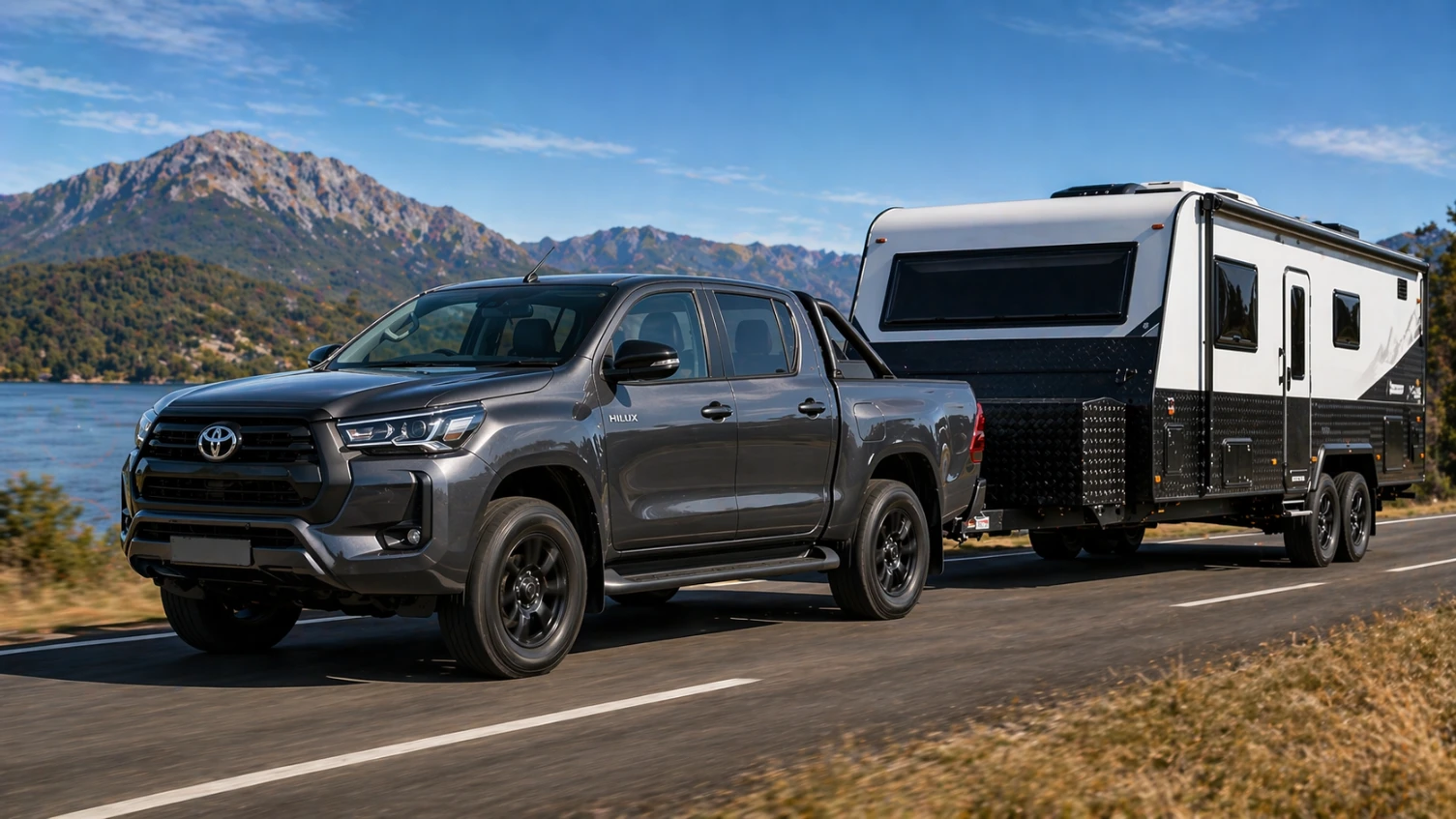
When you’re preparing for a trek across the Simpson Desert or simply hitching up the boat for a weekend at Lake Macquarie, your vehicle’s stability is paramount. Many Australian drivers assume that because their ute or SUV has a “3.5-tonne towing capacity,” it is perfectly equipped to handle that weight straight off the showroom floor. However, there is a significant difference between what a vehicle can legally pull and how safely it handles that load.
Recognising the warning signs that your factory setup is struggling is the first step towards a safer journey. Investing in a suspension upgrade for towing is often the most critical modification a 4WD owner can make. In this guide, we will break down the red flags that indicate your current system is failing and how a vehicle suspension upgrade for towing can transform your driving experience.
1. The Visible “Rear End Sag” (The Squat)
The most obvious sign that you need a car suspension upgrade is the physical appearance of your vehicle once hitched. If the rear of your car sits significantly lower than the front, a phenomenon known as “squatting,” your springs are under-rated for the tongue weight of your trailer.
This isn’t just an aesthetic issue. When the rear sinks, the front of the vehicle rises. This shifts the centre of gravity, disrupts weight distribution, and alters the entire geometry of your car, leading to poor handling and increased wear on your drivetrain.
2. Light or “Vague” Steering
When your vehicle squats, weight is lifted off the front wheels. Since the front wheels are responsible for steering, losing that downward pressure makes the steering feel light, floaty, or disconnected from the road. If you find yourself constantly correcting the wheel while driving on a straight road, it is a clear indicator that you need a towing suspension system built to handle load transfer and keep your vehicle stable.
3. Increased Braking Distances
Safety should always be the priority when hauling heavy loads. Most of a vehicle’s braking power comes from the front tyres. If a heavy trailer is causing the front of your vehicle to lift, your tyres lose the “bite” required to stop quickly. If you’ve noticed that your car takes significantly longer to come to a halt when towing, a heavy-duty suspension for towing is required to keep all four wheels firmly planted on the bitumen.
4. Excessive Swaying and Body Roll
Does your caravan feel like it’s “the tail wagging the dog”? High-speed swaying, trailer snaking, or excessive leaning through corners (body roll) are dangerous signs of an inadequate suspension system. Factory shock absorbers are often too soft to control the massive kinetic energy generated by a swaying trailer. A suspension upgrade for towing includes heavy-duty dampers that “grab” the vehicle’s movement and settle it down quickly.
5. “Porpoising” or Rhythmic Bouncing
If you hit a dip in the road and your vehicle continues to bounce up and down several times before settling, this is called porpoising. This occurs when your springs and shocks cannot control the rebound of the trailer’s weight. This rhythmic bouncing can lead to a loss of traction and is incredibly fatiguing for the driver on long Australian road trips.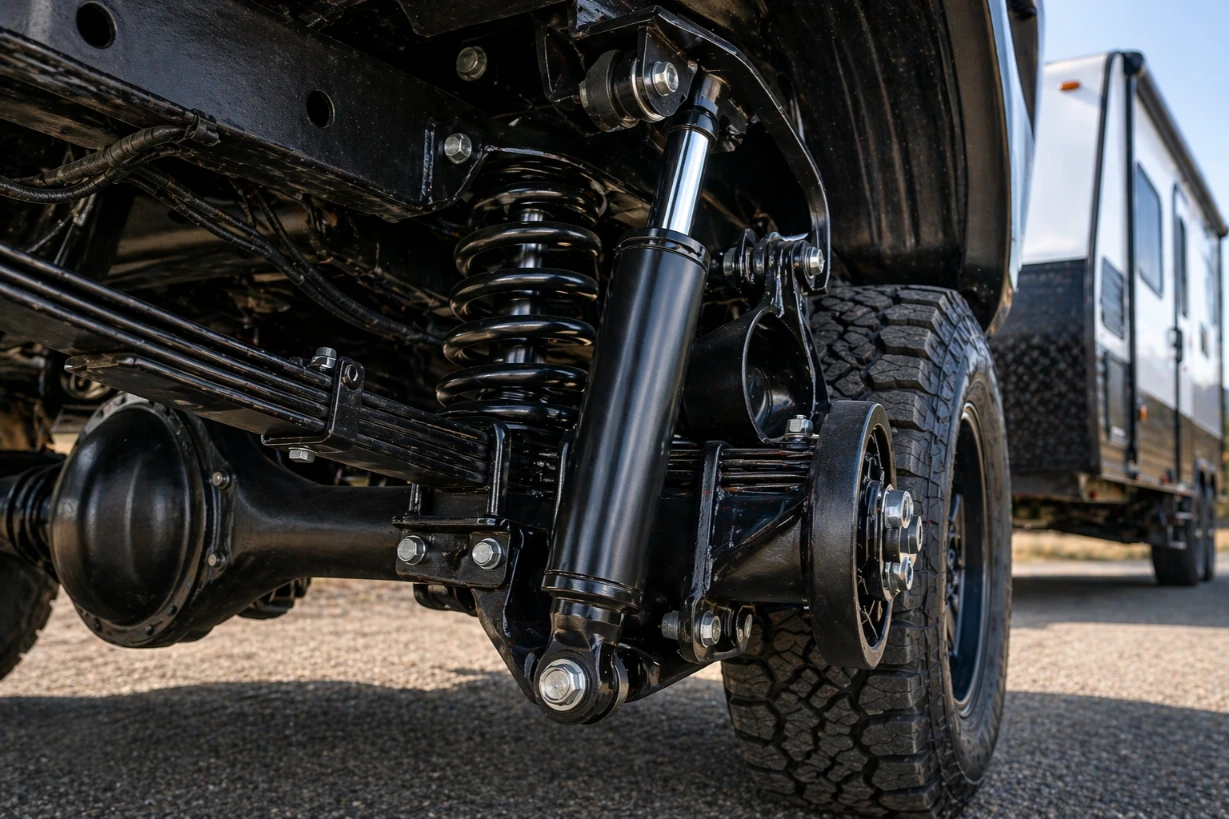
The Benefits of a Heavy-Duty Suspension for Towing
Upgrading to a heavy-duty suspension for towing isn’t just about fixing problems; it’s about enhancing the overall performance of your vehicle.
Improved Load Carrying
Standard springs are designed for a compromise between comfort and load. A vehicle suspension upgrade for towing utilises higher-rated springs (coil or leaf) with an increased spring rate, specifically engineered to carry the extra 200kg to 350kg of ball weight without compromising ride height.
Enhanced Shock Mitigation
Upgraded shock absorbers in a car suspension upgrade feature larger bores and greater oil capacity than standard factory units. This allows them to control rebound damping and dissipate heat more effectively, ensuring they don’t “fade” or become soft during long hauls on corrugated outback roads.
Better Off-Road Versatility
Many Australians use their towing rigs for off-road camping. A suspension system for towing often provides a modest lift (usually 50mm), which gives you the ground clearance needed to navigate ruts and rocks without bottoming out while carrying your gear.
Choosing the Right Suspension System for Towing
When looking for a suspension upgrade for towing, you generally have three main paths to choose from:
- Upgraded Springs and Shocks: Replacing the entire kit with heavy-duty components designed for constant or varying loads.
- Airbag Helper Kits: These are fitted inside or alongside your existing springs. They allow you to add air when towing to level the load and release air for a softer ride when the trailer is unhitched.
- GVM Upgrades: For those carrying massive amounts of gear, a certified Gross Vehicle Mass (GVM) upgrade ensures you stay legal while increasing the vehicle’s overall carrying capacity.