
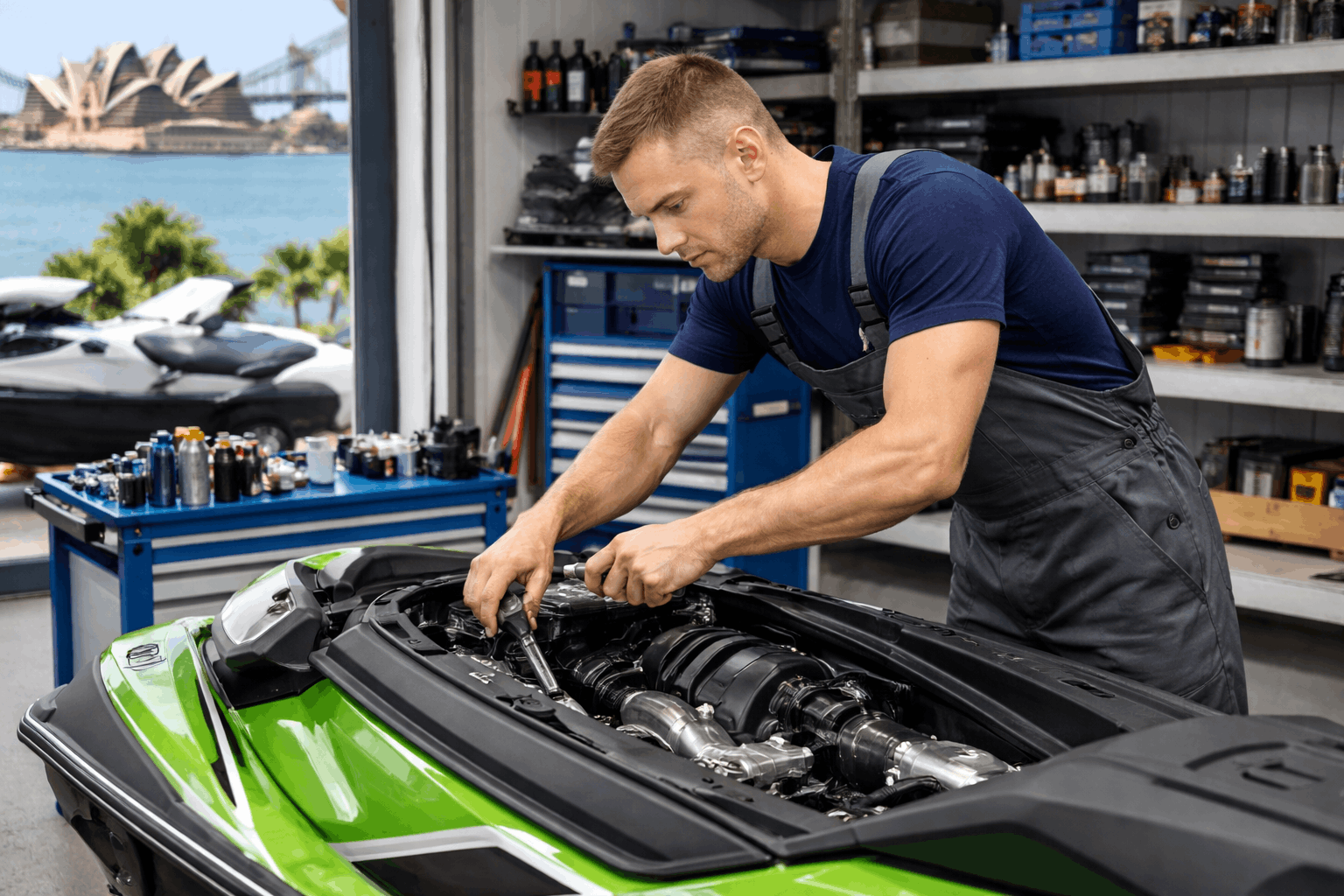
There is nothing quite like the adrenaline rush of skimming across Sydney Harbour, carving through the waves at Cronulla, or exploring the Hawkesbury River on a personal watercraft (PWC). However, the saltwater environment of Sydney is notoriously harsh on machinery. To ensure your weekend isn’t ruined by a mechanical failure in the middle of the heads, staying on top of your Jet Ski maintenance is absolutely vital.
At NM Performance, we know that a well-maintained ski is a fast, safe, and reliable ski. Whether you ride a Sea-Doo, Yamaha WaveRunner, or Kawasaki Jet Ski, the principles of high-performance engineering apply. In this comprehensive 2000-word guide, we will dive deep into everything you need to know about keeping your craft in showroom condition, from daily flushes to major overhauls.
Why Saltwater Environments Demand Strict Maintenance
Sydney is a saltwater paradise, but salt is the natural enemy of your engine and jet pump. When saltwater evaporates, it leaves behind abrasive salt crystals that cause rapid corrosion, blockage of cooling passages, and electrical interference.
Consistent Jet Ski maintenance isn’t just a suggestion; it is a survival requirement for your PWC. Without a proper post-ride routine, even the most expensive models can suffer from “salt-lock” within a single season. This leads to costly mechanical repairs that could have been easily avoided with fifteen minutes of care.
The Post-Ride Ritual: Your First Line of Defence
Every time you pull your ski out of the water at the Rose Bay or Botany Bay boat ramps, your maintenance clock starts ticking.
1. The Engine Flush
This is the most critical part of Jet Ski maintenance. You must flush the cooling system with fresh water to remove salt deposits.
- Pro Tip: Always start the engine before turning on the water, and turn off the water before stopping the engine. This prevents water from backflowing into the cylinders.
2. Exterior Wash and Wax
Use a marine-specific soap to wash the hull and deck. Saltwater can dull the gelcoat and damage the seat material over time. A quick spray of a lanolin-based protectant on the engine components acts as a shield against the salty Sydney air.
3. Bilge Inspection
Check the bilge for excess water, oil, or fuel. A small amount of water is normal, but aim to keep the bilge as dry as possible. If you notice oily residue, it’s time for a professional Jet Ski repair assessment to check for leaks.
The Seasonal Jet Ski Service Schedule
To keep your factory warranty intact and ensure long-term reliability, you must follow a structured Jet Ski service interval. While every manufacturer differs slightly, most follow a 50-hour or 12-month cycle.
The First 10-Hour Service (Break-in)
If you’ve just bought a brand-new ski, the first 10 hours are critical. During this “break-in” period, the engine components settle, and tiny metal shavings can enter the oil.
- What happens: We change the oil and filter, check the pump clearance, and tighten all critical bolts.
The Annual / 50-Hour Service
This is the “standard” Jet Ski service that most Sydney riders will require once a year.
- Engine Oil & Filter: Marine engines work much harder than car engines, often sitting at high RPMs for extended periods. Fresh oil is their lifeblood.
- Spark Plug Replacement: Salt air and high humidity can lead to fouled plugs. Replacing them ensures crisp acceleration.
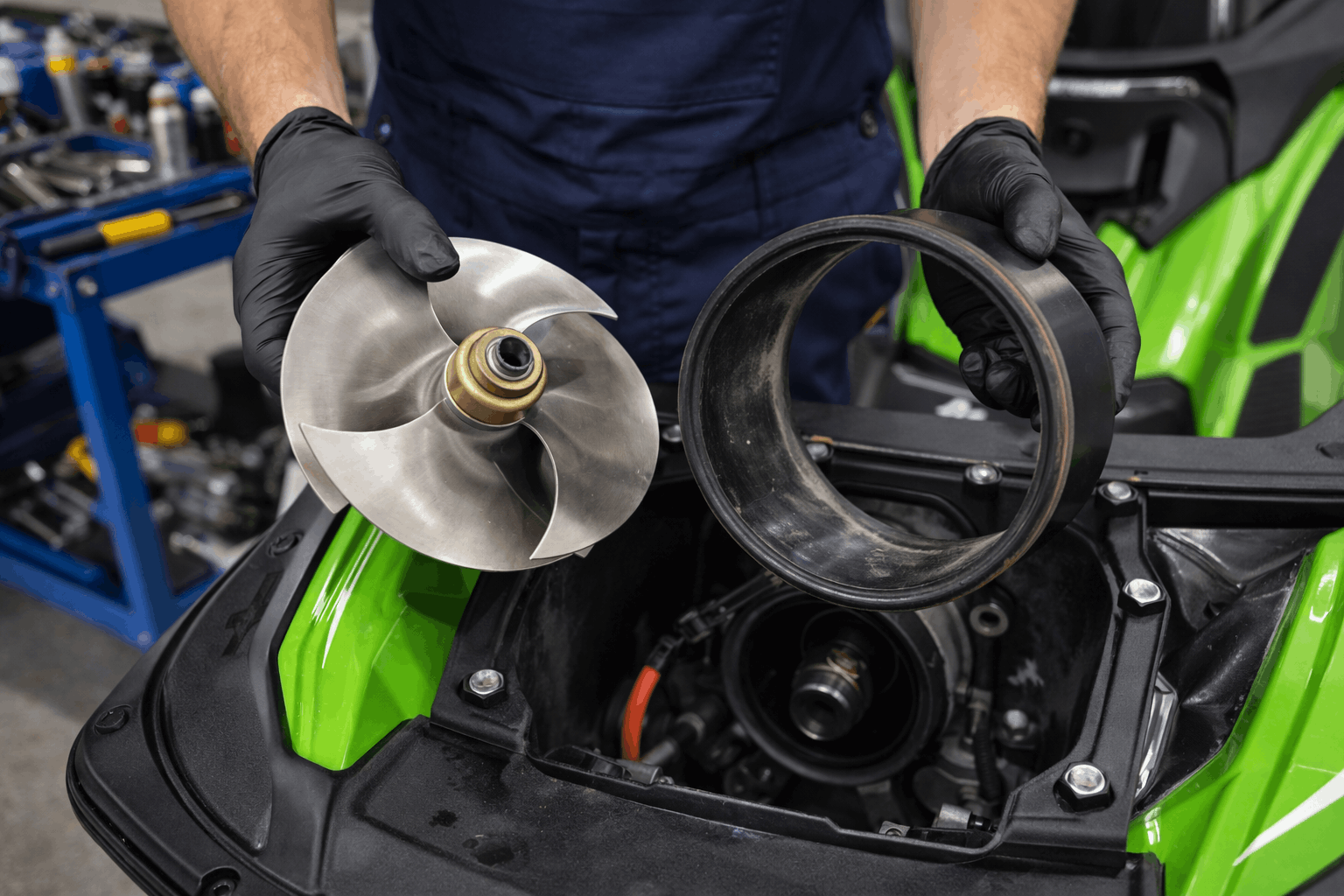
- Pump & Impeller Inspection: We check for dings in the impeller and ensure the wear ring is within tolerance.
- Battery Test: Marine batteries lead a hard life. We ensure yours has the cranking amps to start every time.
How much does a Jet Ski service cost?
One of the most common questions we hear at our Sydney workshop is, “How much does a Jet Ski service cost?”
On average in Sydney, a standard annual Jet Ski service for a four-stroke PWC typically ranges between $350 and $600.
Several factors influence the final price:
- Engine Type: Naturally aspirated engines are generally cheaper to service than supercharged models, which require more frequent inspections of the supercharger clutch and washers.
- Parts Used: Using high-quality marine-grade synthetic oils and genuine filters ensures longevity but costs slightly more than generic alternatives.
- Condition of the Craft: If the ski has been neglected or has heavy salt buildup, additional labour may be required for cleaning and lubrication.
- Trailer Maintenance: Don’t forget the trailer! A proper service should include checking the wheel bearings and lights, which are often submerged in saltwater.
Investing in a regular Jet Ski service is significantly cheaper than a major engine rebuild, which can easily climb into the thousands.
Common Jet Ski Repairs and How to Avoid Them
Even with the best maintenance, parts eventually wear out. However, knowing what to look for can prevent a small issue from becoming a catastrophic Jet Ski repair.
1. Impeller Damage (Sucking up Rocks)
Sydney’s shallow bays can be tricky. If you suck up a stone or a piece of wood, it can nick the impeller or gouge the wear ring. You’ll notice a loss of top-end speed or “cavitation” (where the engine revs but the ski doesn’t move efficiently).
- Prevention: Never start your ski in less than waist-deep water.
2. Supercharger Failure
In high-performance models, the supercharger is a precision instrument. If the internal washers fail, they can send metal debris through the engine.
- Prevention: Adhere strictly to the supercharger rebuild intervals (usually every 100-200 hours, depending on the model).
3. Electrical Corrosion
Corroded wiring looms or spark plug leads can cause misfires.
- Prevention: Regularly apply an anti-corrosive spray to the electrical connections and battery terminals.
Advanced Jet Ski Maintenance: Winterisation
During the cooler Sydney months, many riders leave their skis in the garage for 3-4 months. This is when the most damage occurs. “Dry” seals can crack, and fuel can go stale.
Winterisation steps include:
- Fuel Stabiliser: Adding a stabiliser prevents the fuel from turning into a varnish-like substance that clogs injectors.
- Fogging the Engine: Spraying a fogging oil into the cylinders protects the internal walls from rust.
- Battery Tender: Keeping the battery on a trickle charger ensures it doesn’t drop below a recoverable voltage.
- Anti-Freeze/Coolant Check: Even in Sydney’s mild winters, ensuring your closed-loop cooling system has the right mix is essential for corrosion protection.
Understanding the Internal Systems
To truly master Jet Ski maintenance, it helps to understand how your craft differs from a car.
The Jet Pump System
Unlike a boat with a propeller, a jet ski uses an internal impeller to suck water in and blast it out the back. This pump is the heart of your performance. Treat the pump oil check with the same diligence as a gearbox service, as it is under constant pressure and critical to performance.
Closed-Loop vs. Open-Loop Cooling
Some brands (like Sea-Doo) use closed-loop cooling, similar to a car’s radiator, to keep the engine block away from saltwater. Others use open-loop systems that pull water directly from the ocean. Knowing which system you have dictates how you perform your engine flush.
Performance Upgrades and Maintenance
For the enthusiasts who have invested in performance tuning, maintenance becomes even more critical. Higher boost levels and modified ECU maps put more strain on the cooling and fuelling systems.
- Fuel Injector Cleaning: Essential for tuned skis to prevent lean-out conditions.
- Valve Adjustments: Ensuring the top-end of your engine is in sync is vital for high-RPM reliability.
Why Choose NM Performance for Your Sydney Jet Ski Service?
While we are famous for our automotive expertise, the team at NM Performance Automotive understands the intricacies of high-output marine engines. We apply the same level of diagnostic precision to a PWC as we do to a performance car.
From routine logbook servicing of your tow vehicle to a dedicated Jet Ski service, we offer a “one-stop-shop” for the Sydney weekend warrior. We use the latest diagnostic tools to read fault codes, clear service reminders, and ensure your ski is performing at its absolute peak.