
Modifying your vehicle is an excellent way to enhance performance, handling, and aesthetics. However, before making any changes, it’s essential to understand the car modification laws NSW drivers must follow. These regulations exist to ensure safety, environmental compliance, and roadworthiness throughout New South Wales.
Whether you’re upgrading performance components or enhancing your car’s appearance, understanding what’s legally permitted can save you from fines, defect notices, and insurance complications.
Why Car Modification Laws Exist in NSW
NSW vehicle modification regulations are designed to protect all road users. Upgrades to braking, steering, suspension, emissions, or structural components are strictly regulated. Non-compliant changes may cause your vehicle to fail inspections or be deemed unroadworthy.
Most vehicle modification requirements in NSW are guided by Transport for NSW Vehicle Standards Information (VSI) documents, which outline safety, emissions, and compliance rules for modified vehicles.
Understanding vehicle modification requirements helps ensure your upgrades enhance your vehicle without risking safety or legality.
Engine and Performance Modifications
Performance upgrades are among the most popular vehicle modifications, but they must remain within legal limits.
Modifications such as ECU remapping, turbocharger upgrades, or engine swaps may be permitted, provided emissions standards are met, and the vehicle remains safe to operate. Excessive power increases without supporting upgrades can result in compliance issues.
Supporting services like engine repairs, performance tuning, and logbook servicing are crucial to maintaining reliability and compliance after performance modifications.
Exhaust and Noise Regulations
Exhaust systems are commonly modified for improved sound and performance. In NSW, exhaust noise must not exceed legal decibel limits, and catalytic converters must not be removed or altered.
Aftermarket exhausts are allowed as long as they meet noise and emissions requirements. Regular brake servicing and general car servicing help ensure modified vehicles remain safe and roadworthy.
Suspension and Ride Height Rules
Suspension modifications are permitted but regulated. Vehicles must maintain adequate ground clearance and suspension travel. Lowering or raising a car excessively can affect steering geometry and braking performance.
Suspension upgrades should always be professionally installed to ensure correct alignment and handling characteristics that comply with car modification laws in NSW.
Wheels, Tyres, and Brakes
Wheel and tyre upgrades must stay within approved size limits and load ratings. Tyres must not rub against bodywork or suspension components.
Brake upgrades are encouraged when performance is increased, as they improve safety and stopping power. Brake services and inspections ensure modified braking systems meet legal and performance standards.

Interior and Exterior Modifications
Cosmetic changes such as body kits, spoilers, and interior enhancements are generally legal, provided they don’t create sharp edges or obstruct visibility.
Tinted windows must comply with NSW light transmission limits, and lighting modifications must meet road safety standards.
Certification and Engineering Approval
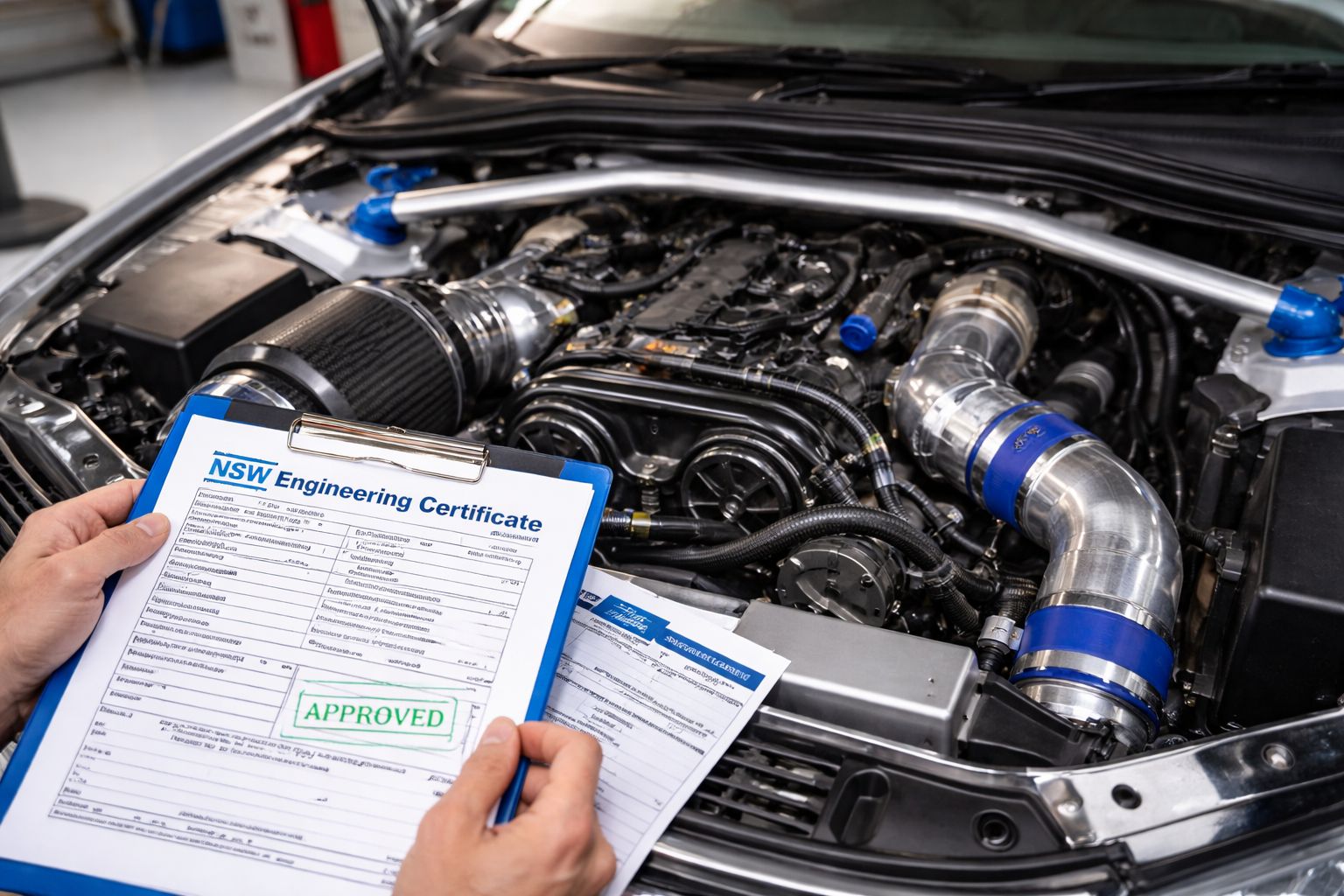
Certification requirements can vary depending on the extent and combination of modifications. Some modifications require engineering certification. This typically applies to major changes like engine swaps, significant suspension alterations, or structural modifications.
An engineer’s certificate confirms the vehicle meets safety and compliance standards. Without certification, you may face registration issues or insurance refusal.
Understanding these requirements before starting your build ensures the process is smooth and stress-free.