
Turbocharged engines are now common in everything from daily drivers to high-performance vehicles. Yet many car owners still ask, ‘How does a turbocharger work?’ and why it makes such a noticeable difference in power. Understanding this system helps you appreciate both the performance benefits and the importance of proper maintenance.
A turbocharger is a forced-induction device that increases engine efficiency and power by pushing more air into the combustion chamber. More air allows more fuel to burn, which creates stronger and more controlled explosions inside the engine, resulting in higher output without increasing engine size.
What Is a Turbocharger?
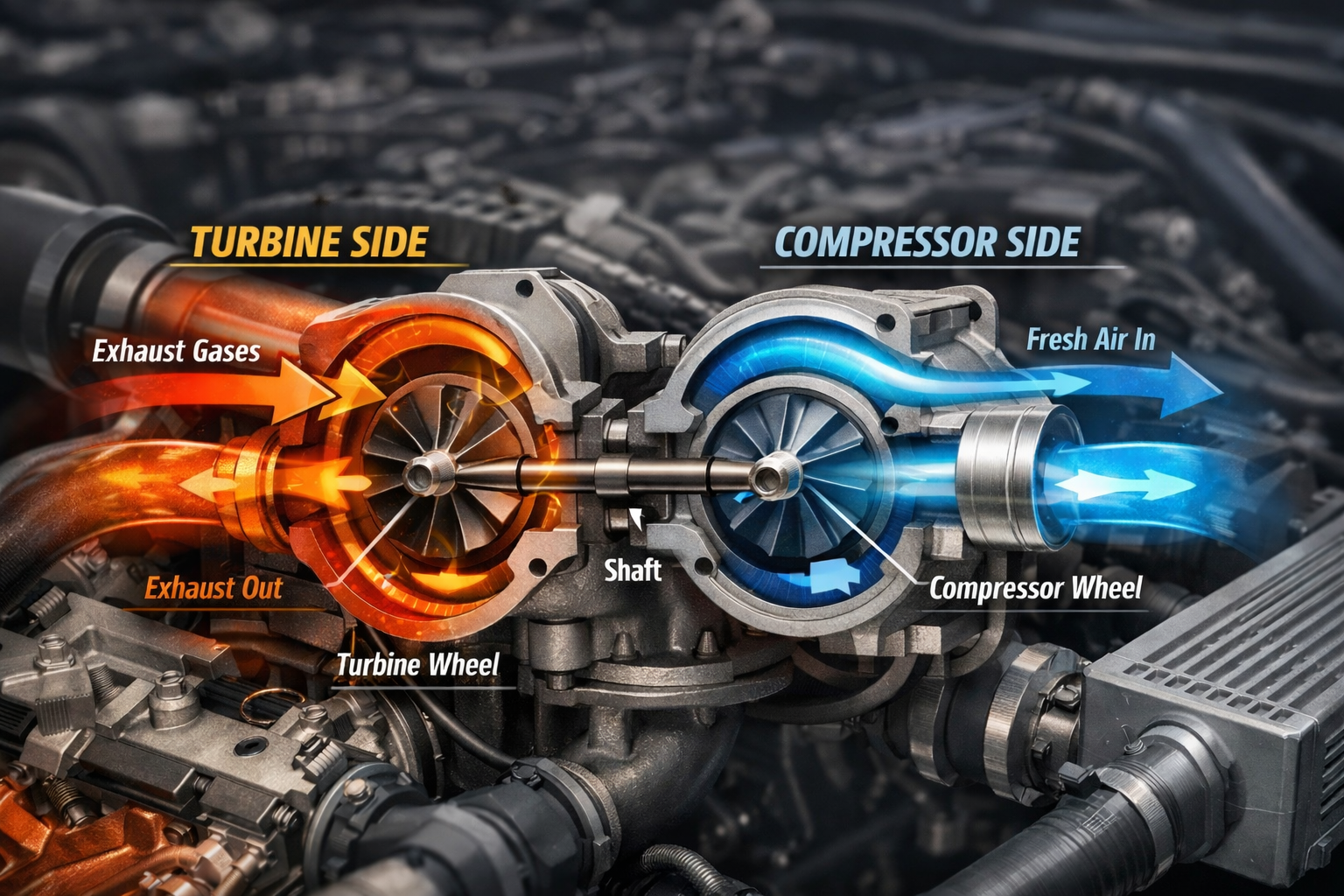
A turbocharger is made up of two main sections connected by a shaft. One side is driven by exhaust gases, whilst the other compresses incoming air and forces it into the engine. This clever use of otherwise wasted exhaust energy is what makes turbocharging so effective.
When drivers ask, ‘How does a turbocharger work?’ the simple answer is that it recycles exhaust gases to create extra power.
How a Turbocharger Works Step by Step
To fully understand how a turbocharger works, it helps to break the process into clear stages.
First, exhaust gases exit the engine and spin the turbine wheel inside the turbocharger. This turbine is connected by a shaft to a compressor wheel on the intake side. As the turbine spins, the compressor draws in fresh air and compresses it before sending it into the engine.
Compressed air contains more oxygen than normal intake air. With more oxygen available, the engine can burn more fuel efficiently, producing more power during each combustion cycle.
Why Turbocharged Engines Produce More Power
Turbochargers allow smaller engines to behave like much larger ones. Instead of increasing engine displacement, turbocharging increases air density inside the cylinders. This means higher horsepower and torque without the weight and fuel penalties of a larger engine.
Compared to naturally aspirated engines, turbocharged engines generate more power from the same engine size by forcing in compressed air rather than relying solely on atmospheric pressure.
Drivers often notice quicker acceleration, stronger mid-range pull, and improved overtaking ability. This is why understanding how a turbocharger works is important for anyone interested in performance upgrades or modifications.
Turbo Lag Explained
Turbo lag refers to the brief delay between pressing the accelerator and feeling the boost. It occurs because exhaust gases must build up enough pressure to spin the turbine.
Modern turbo systems reduce lag through improved designs, electronic controls, and supporting modifications such as ECU tuning and performance exhaust systems. When paired with professional tuning, turbo lag is often barely noticeable in everyday driving.
Turbochargers and Fuel Efficiency
While turbochargers are associated with performance, they can also improve fuel efficiency when driven sensibly. Smaller turbocharged engines often consume less fuel than larger naturally aspirated engines under normal conditions.
However, aggressive driving and frequent boost usage will naturally increase fuel consumption. Regular car servicing and proper tuning play a key role in maintaining a balance between power and efficiency.
Supporting Services That Keep Turbo Engines Healthy
Once you know how a turbocharger works, it’s clear why turbocharged vehicles place greater demands on engine components. Regular logbook servicing, engine repairs, clutch replacement services, brake servicing, suspension upgrades, and complete car servicing help ensure reliable performance.
Turbo systems also rely heavily on clean oil and proper cooling. Skipping maintenance can lead to premature wear or turbo failure, which is why professional care is essential.
Is a Turbocharger Right for Your Vehicle?
If you enjoy responsive acceleration and improved power delivery, turbocharging offers clear advantages. Many modern vehicles come factory-fitted with turbos, while others benefit significantly when combined with professional performance tuning.
Understanding how a turbocharger works helps drivers make smarter decisions about upgrades, maintenance, and long-term reliability.